 I've been much more concerned with my photography lately.
Not
"concerned," in the sense of
"what will become of it?" (although there is that), but just rather with
Photography (capital "P") and how it is a part of me and what I can do to develop (sorry) that part of me.
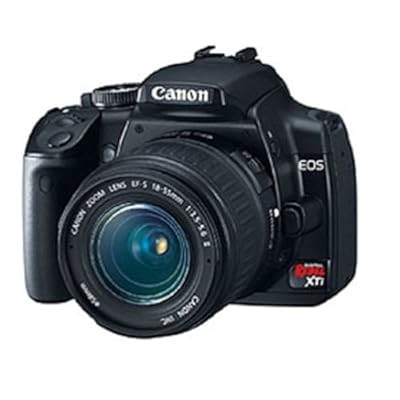
The weird thing is this: I've recently made the foray into the not-inexpensive digital SLR world, by purchasing a Canon Digital
SLR. Let there be no mistaking: I'm wild about this camera. It's a great camera. I feel like I've
come home, in terms of having back the responsiveness of an SLR that I grew up with, a responsiveness that was lost for a number of years as I played with a variety of
point-and-shoot pocket
digital cameras. Those cameras all had their own merits, too, but also their foibles. Mostly, I guess these have to do with my preconceived notions of resolutions and lens quality, etc. I guess, equipment issues. Speed of focusing, ease of use, resolution, that sort of thing.
Recently, I've had some photographic experiences not directly tied to my own work. I've been reading essays by
Janet Malcolm on some of history's great photographers—Steiglitz, Weston, etc. And it's been interesting—more so than I might have guessed, honestly—to read some things about the lives of these characters. In many ways, they had plenty of their own foibles.
Weston, for instance, was a quite the heartbreaker, apparently.
Steiglitz was rather an asshole.
These things are sort of beside the point, but I learned some interesting things not too long ago when I went out on a "photo day" with my friend Boyd. I wanted to play with this lens that I'd rented; Boyd, however, showed up to our location with a
4 x 5 large-format camera—a looming beast in a box, on a hulking tripod. Boyd came prepared to shoot about
a dozen pictures. That is the nature of his contraption. It's not about volume, but rather about quality. Which is more indicative of the history of "art" photography, I guess. I suppose it would be overly broad to claim this about photography in general, since photojournalism has long required "
mass shooting," as my friend
Jenna recently referred to the common practice of shooting many many pictures.
And it's not that I think it
crazy to approach photography from this labor-intensive handful-of-images approach, it just
hadn't really occurred to me. It's a whole other aspect of photography that I had never considered. The nature of
my historic relationship (mostly self-taught) with photography has been the convenience of the SLR, which has, ironically and from time to time, seemed rather
inconvenient to me, compared to the myriad of pocket cameras that have emerged over the years. In fact, a fascination in one camera in particular, the
Lomo, is sort of what got me back into photography after some years of waning interest. That was followed somewhat by a brief foray into the delightful lo-tech medium-format wonder of the
Holga. And I've seen people on Flickr who can do spectacular things with seemingly modest cameras.
Now, with my Canon, I have probably the nicest
(and certainly by far the most expensive) camera that I've ever owned. And, let's not be coy: My investment is
modest compared to the potential of future investment in lenses and so forth.
But here's the rub: As I upgrade my equipment, I've found a growing concern in me: the concern that whatever idiosyncratic style that I may have might be
lost as I "join the troops" who shoot with the
standard arsenal of equipment. A little voice inside says:
Maybe you'd be better off to stick with, say, toy cameras, to keep some sort of oddness that some people seem to love about your photos. But, conversely, maybe I would be hiding in that idiosyncrasy— limited by
a limited technology.
So, while I'm mildly skeptical of my equipment, it's for surprising reasons: I just bought a
new lens, and looked forward to getting it. But after shooting with it, I was happy with the clarity of the
resulting photos, but maybe a little uncomfortable about how …
normal they looked. I mean compared to some of my weird, old blurryvision® pix, of which I'm mighty proud.And to dovetail this in with my mentions of essays about the giants of photography and my experience with my friends who have forayed into medium-format film photography—It's easy to forget
—or never even know—how
hard, how
complicated, how
demanding photography used to be. Now,
everybody has a camera. There's phone cameras, there's little bitty cameras, there's an army of soccer moms with XTi's just like mine.
Which causes me to gulp a little bit. I would like to be a (more) remarkable photographer. I would like
(and there's some embarrassment here) to be
known as a remarkable photographer. And let's not forget this: ideally,
I might also like to be paid as a remarkable photographer.But reading these essays and watching my medium-format dabbling friends, I'm seeing that—historically—being a remarkable photographer was much much
much more arduous. And why should that matter? There's
is a romance about that which is undeniable to me. To understand
the science, to gather together
(and care for!) the equipment, to master
the darkroom, and to shoot in such a way that might
—might!— lead to a handful of exposures in the course of a day—
And all this without the least bit of a guarantee that the photographer would even have the camera pointed at the right thing in the first place.It's kind of mind-blowing, really. I guess that's all I'm wanting to say. But if you want to get together and talk about it over a drink or coffee or (heaven forbid) over a photo shoot, I'm game.I'm going to stick with this digital business for now; but I reserve the right to change my mind and start shooting with
Brownies, if so moved.






 In the wake of the seemingly-settled 15-year lawsuit between Apple Computer and the Beatles' label Apple Records, some people are saying


 Posts
Posts


